
by julie.frenchclassteacher.us | Mar 9, 2026 | Communication in French, Grammar
The French subjunctive is one of the grammar topics that confuses many learners. If you have studied French for a while, you have probably heard sentences like: Il faut que tu viennes. Je veux que tu comprennes. Je suis content que tu sois ici. And maybe...
by julie.frenchclassteacher.us | Feb 17, 2026 | Grammar
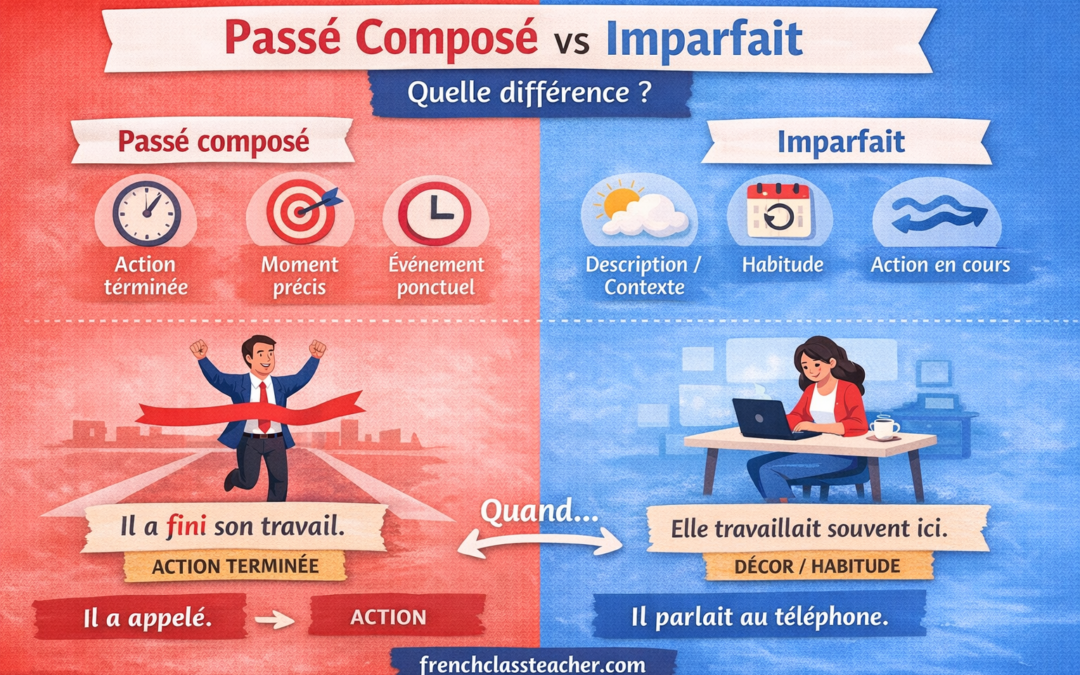
One of the biggest difficulties for French learners at B1 level is understanding the difference between the passé-composé and the imparfait. Both tenses talk about the past… But they are not used in the same way. And often, the problem is not conjugation. The real...

by julie.frenchclassteacher.us | Feb 2, 2026 | Grammar
Learn French future tense and talk using it is very important in French. We talk about the future to explain our plans, make promises, organize a day, or be polite. So Let’s learn. The near future: an action that will happen soon...
by julie.frenchclassteacher.us | Jan 21, 2026 | Grammar, Vocabulary
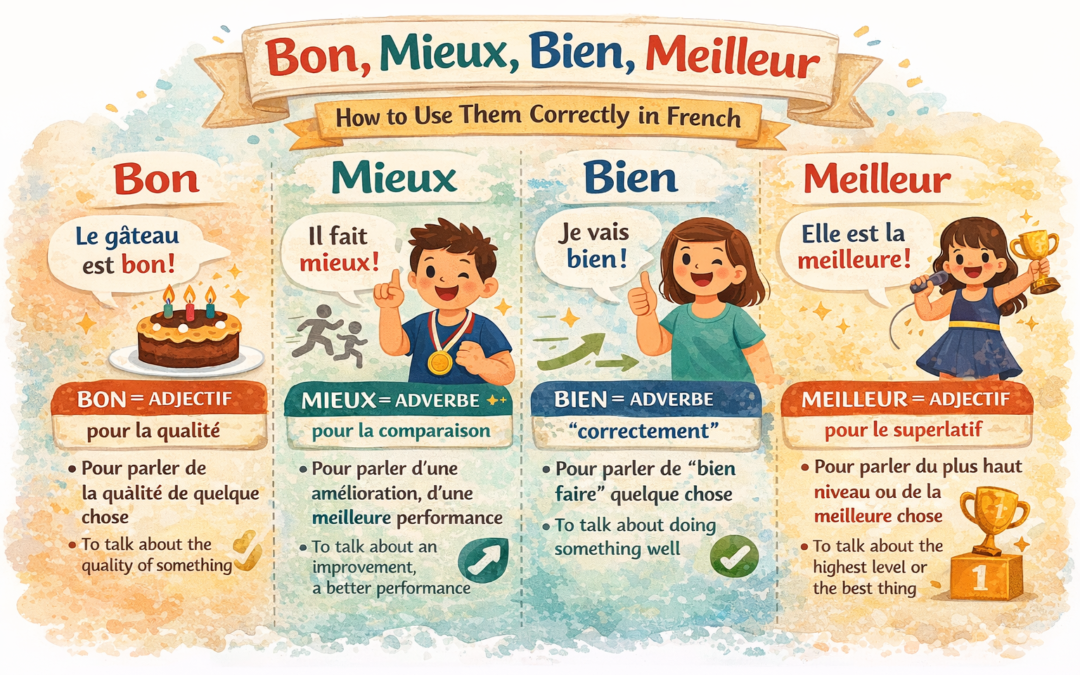
Learning French often means confronting small words that cause big confusion. Among the most challenging for learners are bon, bien, mieux, and meilleur. These words are closely related, frequently used in daily conversation, and yet very easy to mix up — even for...
by julie.frenchclassteacher.us | Jan 7, 2026 | Grammar, Vocabulary
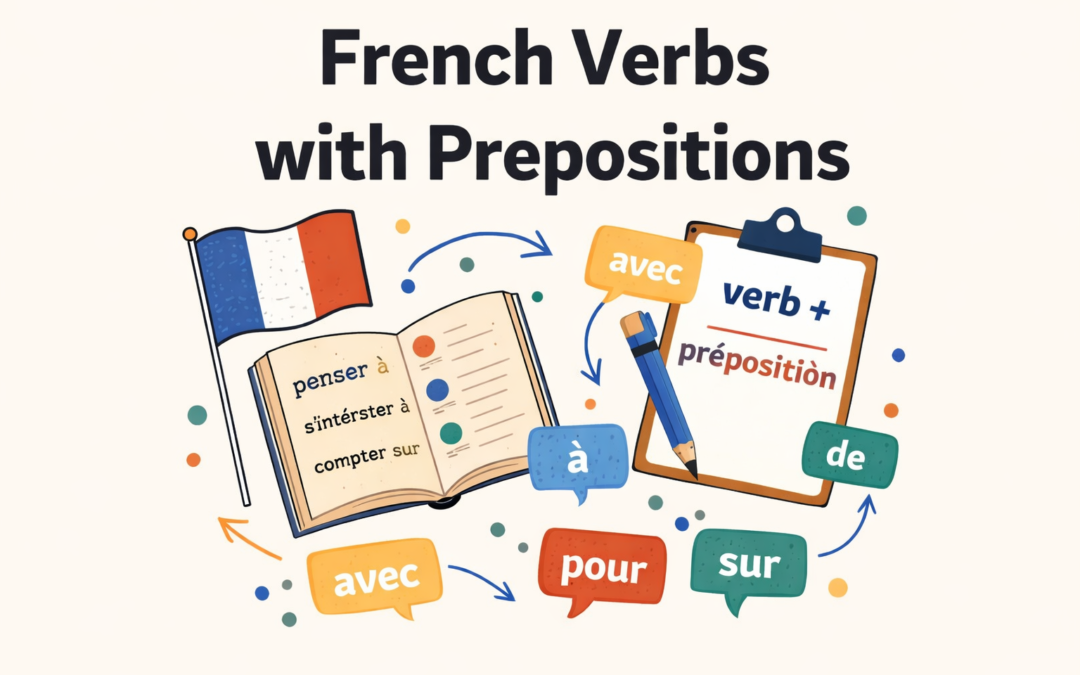
If you read the first article titled “À or De in French: How to Choose?”, you learned a key principle for improving in French: The preposition depends on the word that comes before it, often a verb, an adjective, or a fixed expression. That first...

by julie.frenchclassteacher.us | Dec 16, 2025 | Grammar
Choosing between the French prepositions à and de is one of the most common challenges for French learners’ beginners, intermediate, and even advanced students. These two small words seem simple, but they are difficult to use. Examples: Je commence à apprendre le...