
Blog

10 Intermediate French Mistakes That Keep You Stuck (And How to Fix Them)
You’ve been learning French for a while now. You understand a lot. You can follow conversations… sometimes. You can speak… but not as well as you’d like. And yet, something feels stuck. You’re not a beginner anymore — but you’re not fluent either. This is what...

Ways to Say “I Love You” in French (Without Sounding Awkward)
Love is universal — but the way we express it is deeply cultural. If you’ve ever tried to say “I love you” in French, you might think it’s simple: just say Je t’aime. But in reality, it’s not that straightforward. French is a language of nuance, emotion,...
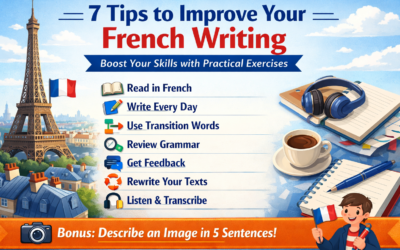
How to Improve Your French Writing (With Exercises)
Improve your Writing in French can feel difficult, even if you already understand the language. You may know vocabulary but struggle to build sentences. Or you may write correctly but lack flow and natural expression. The truth is that improving your French...
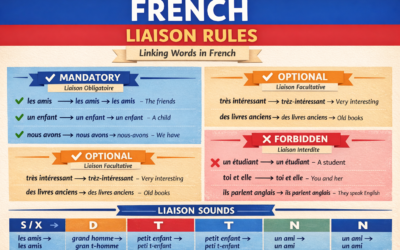
French Liaison Rules
One of the most distinctive features of spoken French is liaison. If you have ever listened to native speakers, you may have noticed that words often seem to connect smoothly together. For example, instead of saying: les amis as two separate words, French...
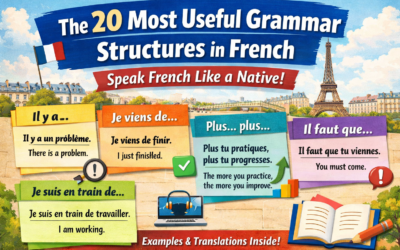
The 20 Most Useful French Grammar Structures
When you learn French, vocabulary is important—but grammar structures are what truly make you sound natural. Many learners know individual words but struggle to build correct and fluid sentences. The key is not to memorize random words, but to learn...

50 French Sentences French People Use Every Day
When you learn French, textbooks often teach you formal phrases like Comment allez-vous ? or Je ne sais pas. But when you actually listen to French people speaking in everyday life, you quickly realize something: real French sounds very different. Native...

The Subjunctive: A Simple Method to Finally Understand It
The French subjunctive is one of the grammar topics that confuses many learners. If you have studied French for a while, you have probably heard sentences like: Il faut que tu viennes. Je veux que tu comprennes. Je suis content que tu sois ici. And maybe...

The 5 Daily Habits of Students Who Speak French Fluently
Why do some students reach fluency in French while others stay stuck for years at the same level? It’s not talent. It’s not living in France. And it’s definitely not studying grammar for 4 hours every day. Fluent French speakers build daily habits....

Responding to a Job Offer: A Complete Guide for French Learners
Applying for a job in French can feel intimidating, especially if you are not familiar with professional codes and formal writing conventions. However, once you understand the structure and expectations, responding to a job offer becomes a logical and...
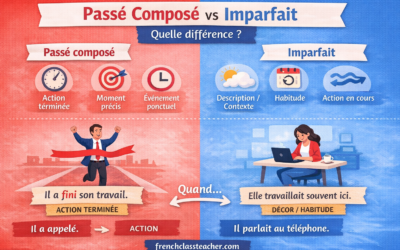
Difference Between the Passé Composé and the Imparfait
One of the biggest difficulties for French learners at B1 level is understanding the difference between the passé-composé and the imparfait. Both tenses talk about the past… But they are not used in the same way. And often, the problem is not conjugation. The real...